Why DIY Filing Looks Attractive

Trademark offices publish their application forms online. Government filing fees are fixed and listed publicly. Online guides walk you through the steps. From the outside, filing a trademark looks like filling out a form and paying a fee — something you can do in an afternoon.

This perception is partly accurate. The mechanics of submitting an application are not complex. What is complex — and what those online guides consistently understate — is everything that surrounds the form: the strategic decisions before filing, the legal knowledge required to make those decisions well, and the monitoring and response work required after filing.

When a self-filed trademark application fails, the cost is not just the filing fee. It is the 18–24 months of processing time lost, the need to refile, and in the worst cases, the discovery that a competitor registered your brand name in a class you overlooked — legally and permanently.

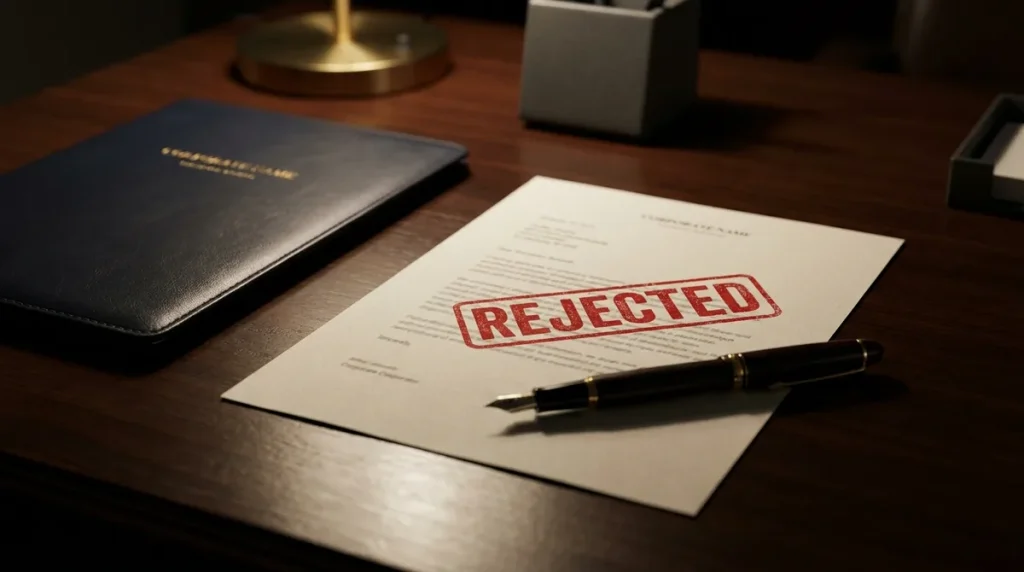
The hidden cost of DIY failure is time, not just money. A rejected application means 18–24 months of processing wasted. If a competitor files during that period — even in a class you overlooked — they can legally own your brand name in that channel.

The 5 Most Common DIY Failure Points

IGBS has reviewed and remediated hundreds of self-filed trademark applications over the years. These are the failure modes that appear consistently:

1. Wrong or Incomplete Class Selection

The Nice Classification system has 45 classes covering all possible goods and services. Self-filers almost always select the most obvious class and stop there — failing to cover adjacent classes where their brand operates or will operate. A fashion brand that registers in Class 25 (clothing) but not Class 35 (retail) leaves a gap a competitor can legally exploit. A software company that registers in Class 42 (software services) but not Class 9 (software products) may find its app store rights unprotected.

2. Inadequate Clearance Search

Most self-filers run a basic search on the trademark office's public database, see nothing exact, and proceed. Professional clearance searches go further: they check phonetic equivalents, visual similarities in logo marks, transliterations, related classes, pending applications (which don't appear in registered-mark searches), and common-law use that might not be formally registered. A DIY search that misses a conflicting mark costs you an eventual rejection — or worse, a cease-and-desist after you have already invested in marketing the brand.

3. Vague or Overbroad Goods/Services Description

Trademark offices require a precise description of the goods or services covered by your application. Too vague and the examiner rejects it. Too broad and you may claim goods you do not actually use, creating vulnerability to later challenge. EIPA in Egypt, SAIP in Saudi Arabia, and MOEC in the UAE each have specific terminology requirements and accepted descriptions. Self-filers routinely submit descriptions that trigger formal office actions or end up protecting a narrower scope than intended.

4. Missing the Response Deadline After an Office Action

Most self-filed applications receive at least one office action — a formal examiner query requiring a response within a fixed deadline. Egypt gives 60 days, Saudi Arabia 60 days, the UAE 30 days. Self-filers who did not know to expect an office action often miss it entirely — they submitted the application, received no immediate news, and assumed they would hear when the trademark was approved. Missing the deadline means automatic abandonment. The filing fee and processing time are forfeit.

5. No Renewal Monitoring

A registered trademark lasts 10 years — then must be renewed. There is no automatic reminder from the trademark office. Self-filers frequently let their registration lapse simply because they forgot. A lapsed trademark can be immediately registered by a third party, stripping you of protection you paid for and built a business around. This is particularly painful because the investment in the brand continues — it is just the legal protection that silently expires.

What a Trademark Agent Actually Does

The form submission is perhaps 10% of what a professional trademark agent provides. The other 90% is strategic risk management that happens before, during, and after the filing.

DIY Filing — What You Handle

  • Submit the application form
  • Pay the government filing fee
  • Wait for news from the trademark office
  • Hope no conflicts arise
  • Remember to renew in 10 years

Professional Agent — What They Handle

  • Comprehensive clearance search (phonetic, visual, class-wide)
  • Strategic class selection and multi-class coverage
  • Precisely drafted goods/services descriptions
  • Application submission and procedural management
  • Office action monitoring and response drafting
  • Opposition window monitoring
  • Renewal tracking and reminders
  • Advice on registrability before you brand around a name
  • Multi-country coordination if you operate regionally

The Real Cost of DIY Errors

It helps to run the numbers concretely. Consider a brand registering a trademark in Egypt across two classes:

ScenarioGovernment FeesProfessional FeesTime to RegistrationRisks
DIY — First Attempt SucceedsEGP 5,300–8,700 per classNone18–24 monthsClass gaps, weak description, no monitoring
DIY — Rejected, Must RefileDouble government fees (first attempt forfeit)Cost to remediate (if agent engaged after rejection)36–48 months totalCompetitor files during the gap
Professional FilingEGP 5,300–8,700 per classFixed professional fee covering full process18–24 monthsMinimal — covered by agent

The professional fee is a known, fixed cost. The DIY risk is an unknown, variable cost — which in a worst-case scenario (rejected application, refile, competitor filing in the gap) can become significantly larger than the agent’s fee would have been.

When Self-Filing Might Be Acceptable

This article is not a blanket argument against all self-filing. There are scenarios where a well-prepared self-filer can navigate the process successfully. These conditions all need to apply together:

If any of these conditions does not apply — particularly if the mark has been commercially invested in, operates across multiple categories, or targets the GCC market — professional filing is the lower-risk choice.

What to Look for in a Trademark Agent

Not all trademark agents are equal. When selecting a firm, the questions that matter:

IGBS has registered over 17,000 trademarks since 2010 across Egypt, the GCC, and 100+ countries via our international network. Our fixed-fee model covers the complete process from clearance search through certificate issuance — no surprise invoices.

Frequently Asked Questions

Technically yes — EIPA allows individuals and companies to file trademark applications directly. However, self-filers in Egypt face a significantly higher rejection rate because the process requires precise class selection, accepted EIPA terminology in the goods/services description, and knowledge of existing marks that might conflict. A rejected application costs you the filing fee and 18–24 months of processing time. IGBS recommends professional filing for all trademarks that represent genuine business value.

A trademark agent's core value is strategic risk management, not form-filling. Before filing, an agent conducts a professional clearance search to identify conflicting marks you would not find in a basic database search. They select the right Nice classes, draft a precise goods/services description, monitor the application after filing, respond to office actions, track the opposition window, and handle renewal deadlines. They also advise on whether a mark is registrable before you invest in branding it.

Professional trademark registration fees in Egypt vary by firm and scope. IGBS charges fixed fees covering the full process — from clearance search through certificate issuance — so clients know the total cost upfront with no surprise invoices. The professional fee is an investment: a single rejected application costs you the filing fee plus 18–24 months of processing time, and a registration with an incorrectly specified class may provide weaker protection than expected.

The single most common DIY mistake is incorrect class selection — choosing the wrong Nice class or too few classes, which leaves significant gaps in your protection. Competitors can file in the classes you missed and legitimately use your brand name in those channels. The second most common mistake is an inadequate clearance search — not finding existing marks that will trigger a rejection or, worse, not finding them until after you have built a brand around the name.

In most MENA jurisdictions, trademark agents are licensed IP professionals authorized to represent clients before the trademark office — they are not necessarily lawyers but have specialized trademark training. Trademark lawyers can additionally provide litigation support and broader IP legal advice. For registration and office action responses, a licensed trademark agent is typically sufficient. For opposition, cancellation, or infringement proceedings, a firm like IGBS that offers both agent services and legal representation provides the most comprehensive protection.

Ready to Register the Right Way?

IGBS handles everything — clearance search, filing, office action response, opposition monitoring, and renewal — under a single fixed fee. No surprises, no gaps, no missed deadlines.

What Is a Trademark Office Action?

A trademark office action is a formal letter from the trademark authority — EIPA in Egypt, SAIP in Saudi Arabia, MOEC in the UAE — explaining why your application cannot proceed as filed. It is not an outright permanent rejection. It is an examiner raising objections that you have the opportunity to address.

Office actions are extremely common. Even well-prepared applications frequently receive them — because trademark examiners are conservative by design. Their job is to protect the existing trademark register from conflicts, not to approve every application. A rejection letter does not mean your brand is unregistrable. It means the examiner found issues that need a response.

What matters most when you receive an office action is this: you have a deadline. In most jurisdictions, missing the response deadline means your application is automatically deemed abandoned. The filing fee you paid is gone. You start over from scratch.

Deadlines are hard and unforgiving. Egypt (EIPA) typically allows 60 days to respond. Saudi Arabia (SAIP) gives 60 days. UAE (MOEC) gives 30 days. Extensions exist but are not guaranteed. The moment you receive an office action, calculate your response due date and treat it as immovable.

The 6 Most Common Rejection Grounds

Understanding what type of rejection you received is the first step. Each ground has a different response strategy.

1. Likelihood of Confusion

Your mark is too similar to an already-registered mark in the same or related class. The most common rejection. Can be argued on visual, phonetic, and conceptual distinctiveness — or resolved by narrowing the goods/services.

2. Descriptiveness

Your mark describes the product or service too directly (e.g., "Fresh Juice" for a juice brand). You can argue acquired distinctiveness through long commercial use or disclaim the descriptive portion.

3. Genericness

Your mark is the common name for the goods or services (e.g., "Laptop" for computers). This is the hardest rejection to overcome. Generic marks are rarely registrable even with heavy commercial use.

4. Geographical Indication

Your mark consists primarily of a geographic name that could mislead consumers about the product's origin (e.g., "Zurich Watches" if not from Zurich). Can be overcome with evidence of acquired distinctiveness or by amending the mark.

5. Absolute Grounds (Public Policy)

Your mark contains elements that are prohibited under local law — religious symbols, national emblems, offensive content, or deceptive elements. These are near-impossible to overcome without substantially amending the mark.

6. Procedural / Formal Defects

Missing documents, incorrect applicant details, incomplete specimen of use, or improper class descriptions. The easiest type to resolve — usually just a matter of submitting corrected information within the deadline.

Response Strategies by Rejection Type

Responding to Likelihood of Confusion

This is the most contested and nuanced type of rejection. Your response needs to demonstrate that despite surface similarities, consumers would not confuse your mark with the cited mark. The arguments you can make:

Responding to Descriptiveness

For descriptiveness rejections, you have two main paths. The first is to argue that the term is suggestive rather than descriptive — it hints at a quality but requires imagination to connect it to the goods, which puts it above the registrability threshold. The second is to claim acquired distinctiveness (called “secondary meaning” in some jurisdictions): submit evidence that consumers in your target market have come to associate the term exclusively with your brand through years of commercial use.

Evidence for acquired distinctiveness typically includes: length and exclusivity of use, sales volume, advertising spend, consumer surveys, third-party references calling the term a brand name, and media coverage identifying the term as your brand.

Responding to Formal Defects

These are the easiest office actions to resolve. The examiner is telling you that something in your filing is incomplete or technically incorrect — not that your mark is unregistrable. Read the notice carefully to identify exactly what is missing, gather the required documents or corrected information, and submit within the deadline. Common fixes include updating applicant details, providing a clearer specimen showing the mark in use, or revising the goods/services description to match the accepted class terminology.

Response Deadlines by Country

CountryAuthorityResponse DeadlineExtension AvailableAppeal Route
EgyptEIPA60 days from notice dateLimited — apply before deadline expiresTrademark Appeals Committee → Economic Courts
Saudi ArabiaSAIP60 days from notice dateAvailable on application with justificationSAIP Appeals Committee → Administrative Court
UAEMOEC30 days from notice dateRarely granted; apply immediately if neededMOEC Appeals Panel → Federal Courts

When to Fight vs. When to Abandon

Not every rejection is worth fighting. A professional assessment will tell you whether the rejection ground is solid or weak. Here is how to think about it:

The cost of fighting vs. refiling is worth calculating. A successful office action response can save the 18–36 months it takes to restart registration. But a strategically strong rebranding — with a clearly distinctive mark — can be faster and stronger in the long run than winning a difficult rejection battle.

What If the Examiner Maintains the Rejection?

If your office action response is rejected and the examiner issues a final refusal, you are not done. Every jurisdiction in the region has an appeals process. In Egypt, you appeal to the Trademark Appeals Committee within EIPA — a panel of senior examiners who review the case fresh. If unsuccessful there, you can escalate to the Egyptian Economic Courts for a full judicial review.

In Saudi Arabia, SAIP’s Trademark Appeals Committee handles first-level appeals. The Administrative Court handles further escalation. In the UAE, MOEC’s appeals panel reviews cases before they move to the federal court system.

Appeals are formal legal proceedings. They require well-structured arguments, supporting case law or precedent where available, and ideally representation by an IP firm experienced in appellate proceedings in that specific jurisdiction. IGBS handles appeals across all three countries and has a track record of overturning incorrectly issued refusals at the administrative appeal level.

Frequently Asked Questions

If EIPA issues a refusal, you typically receive a written notice stating the grounds. You have 60 days from the date of the notice to submit a formal response — arguing why the rejection is unfounded, amending the application, or providing evidence. If the examiner maintains the refusal after your response, you can appeal to the Trademark Appeals Committee and, further, to the Egyptian Economic Courts.

"Likelihood of confusion" means the examiner believes your trademark is similar enough to an already-registered mark that consumers might confuse the two brands. You can respond by arguing the marks are visually and phonetically distinct, the goods/services are in different market segments, or by submitting evidence that both marks have coexisted without actual confusion.

Yes. If SAIP rejects your trademark application, you can file a formal appeal within 60 days of the rejection notice. The appeal goes to the Trademark Appeals Committee within SAIP. If the Committee upholds the rejection, you can further escalate to the Administrative Court. IGBS regularly handles SAIP appeals and has a strong success rate in overturning incorrectly issued refusals.

Possibly. You can argue acquired distinctiveness — if the mark has been in commercial use long enough that consumers now associate it exclusively with your brand. Alternatively, you can disclaim the descriptive portion and register the remaining distinctive elements, or argue the term is suggestive rather than descriptive.

In the UAE, MOEC typically allows 30 days to respond to an office action. Extensions are rarely granted. Missing the response deadline usually results in the application being deemed abandoned. IGBS monitors all client applications across the GCC and handles office action responses to ensure no deadlines are missed.

Received a Trademark Office Action?

IGBS has responded to thousands of trademark office actions across Egypt, Saudi Arabia, and the UAE. We will assess your rejection and tell you exactly how to fight it — or whether a smarter path exists.

Get a Free Consultation