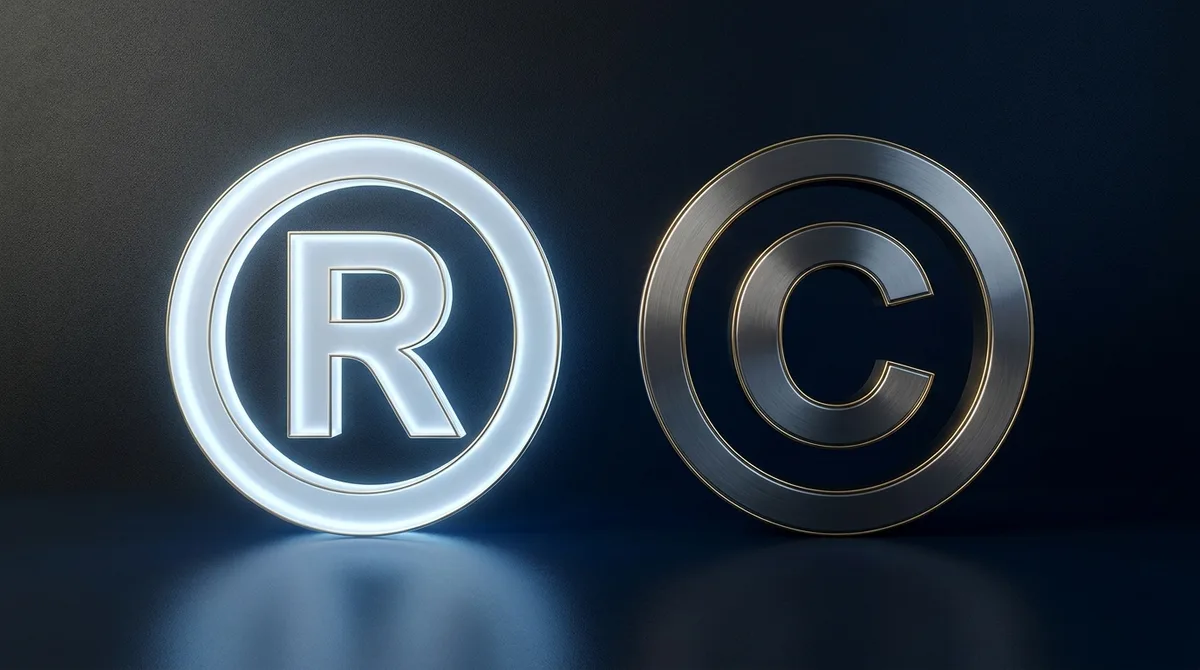
What Is a Trademark?
A trademark is any sign that distinguishes the goods or services of one business from another. It can be a name, logo, slogan, color, sound, or even a product shape — anything that functions as a brand identifier in the marketplace.
Examples in Egypt and the region: the Juhayna wordmark and packaging colors, the Vodafone red circle, the Pepsi wordmark, the Nokia ringtone. These are all registered trademarks — legal monopolies on specific brand identifiers within specific markets and product categories.
Trademark registration is voluntary but essential. Without registration, you have very limited legal recourse when a competitor copies your brand identity. With registration, you have the exclusive right to use the mark commercially, the ability to sue infringers, and a publicly searchable record that puts the world on notice of your ownership.
- Duration: 10 years, renewable indefinitely every 10 years
- Registration required: Yes — apply with EIPA (Egypt), SAIP (Saudi Arabia), MOEC (UAE)
- Protection scope: Within the registered country, in the registered Nice classes
- Governed by in Egypt: IP Law No. 82 of 2002, administered by EIPA
What Is Copyright?
Copyright protects original creative works — books, articles, music, films, photographs, paintings, software code, architectural drawings. It protects the specific creative expression, not the ideas or information contained in it.
The critical difference from trademark: copyright protects the content; trademark protects the brand. Copyright says "I created this specific work." Trademark says "This identifier represents my business."
In Egypt, copyright is automatic — it arises the moment an original work is created, requiring no registration, no application, and no fee. You own copyright in your business's original photographs, marketing videos, website content, and software from the moment of creation.
- Duration: Author's lifetime + 50 years (Egypt); lifetime + 70 years (EU/USA)
- Registration required: No — automatic upon creation in Egypt
- Protection scope: The specific creative work, in all countries that are Berne Convention members (virtually the entire world)
- Governed by in Egypt: IP Law No. 82 of 2002, Part Three, administered by the Egyptian Cultural Development Fund
Side-by-Side Comparison
Here is how trademark and copyright differ across every dimension that matters for business owners:
| Dimension | Trademark | Copyright |
|---|---|---|
| What it protects | Brand identifiers: names, logos, slogans, colors, sounds | Creative works: text, art, music, film, code, photos |
| How you get it | Apply with EIPA (or SAIP, MOEC, etc.) | Automatic upon creation — no application needed |
| Duration | 10 years, renewable forever | Author's life + 50 years (Egypt) |
| Registration required | Yes (strongly recommended) | No (automatic) |
| Cost in Egypt | EGP 3,500–5,000+ per class | Free (automatic protection) |
| Geographic scope | Country of registration only | All Berne Convention countries (automatic) |
| Who can own it | Individuals and companies | The creator (or employer under work-for-hire) |
| Authority in Egypt | EIPA (Egyptian Intellectual Property Authority) | Egyptian Cultural Development Fund |
The core distinction: Copyright says "I created this." Trademark says "This identifies my brand." Both protections cover different angles and are not substitutes for each other.
Can the Same Asset Have Both?
Yes — and many business assets carry both simultaneously, protecting different dimensions of the same thing.
™ Trademark protects
The brand identity function — the fact that "Nike" or a swoosh logo identifies goods from Nike Inc. Stops competitors from using confusingly similar brand identifiers.
© Copyright protects
The artistic creation — the specific graphic design of the logo as an original artwork. Stops others from copying that exact artistic work.
Real examples of dual protection:
- Company logo: Copyright covers it as an artistic work (automatic); trademark registration covers it as a brand identifier (requires filing)
- Marketing jingle: Copyright belongs to the composer; trademark registration as a sound mark protects it as a brand signal
- Software product: Copyright protects the source code; trademark protects the product name ("WhatsApp," "Uber")
- Packaging design: Copyright covers the artwork; trademark (trade dress) covers the distinctive overall appearance as a brand identifier
- Book series: Copyright covers each book's content; trademark protects the series name as a commercial brand
Which One Does Your Business Need?
Most businesses need trademark registration above all else — because their primary risk is a competitor copying their brand identity and confusing customers, not someone reproducing their specific content. Here is a practical guide by business scenario:
Common Mistakes to Avoid
These misconceptions cause real financial and legal damage:
- "My logo is original artwork — I don't need to register a trademark." Wrong. Copyright stops someone from copying the exact artwork. It does not stop a competitor from using a similar-looking name or logo as their brand. Trademark registration is required for brand protection.
- "A trademark protects the art." A trademark on the word "Nike" does not prevent an artist from drawing the swoosh shape in their artwork — copyright would govern that. A trademark on a logo protects it as a brand identifier, not as artwork.
- "I registered my business name with the commercial registry — my brand is protected." Commercial registration is a business licensing mechanism, not IP protection. It does not prevent others from using your name as a trademark. You need a separate trademark registration with EIPA.
- "Copyright registration in Egypt protects me internationally." Copyright is international (Berne Convention covers 180+ countries) but trademark is not. Your Egyptian trademark only protects you in Egypt. File separately in Saudi Arabia, UAE, and any other target market.
- "I'll trademark it later when I'm bigger." Egypt uses a first-to-file system. Later can mean after a competitor files first and you lose the right to use your own brand name.
The single biggest mistake: Relying on copyright to protect your brand identity. Copyright protects creative expression. Trademark protects commercial identity. You need both — and for most businesses, trademark registration is the more urgent priority.
Frequently Asked Questions
Not Sure Which Protection You Need?
IGBS has handled thousands of trademark and IP cases since 2010. Our legal team will assess your situation and recommend exactly what protection you need.
Get a Free Consultation Our Services